After Hormuz: A Possible Geography of Mideast Violence To Come
The U.S. can't break Iranian control of an economically crucial strait. But Washington might seek to render it irrelevant

The U.S. can't break Iranian control of an economically crucial strait. But Washington might seek to render it irrelevant
Edited by Sam Thielman
TODAY IS "ECONOMIC D-DAY," and in Treasury Secretary Scott Bessent's telling, that spells doom for Iran. The Trump administration is promising new sanctions—less on Iran's already heavily sanctioned economy, and instead on its trading partners—although Bessent didn't get specific at his much-hyped Monday press conference. Bessent's intent is to force those Iranian trade partners to choose between access to U.S. markets and continued business with Iran. His goal is to compel Iran to relinquish its hold over the Strait of Hormuz, the economically vital waterway through which Persian/Arabian Gulf petroleum and derivative products transit for export. It's the latest admission that the U.S., after six months and a massive amount of Iranian and regional devastation, cannot militarily dislodge Iran from controlling Hormuz.
"If we are doing the maximum economic pressure, then that means that likely there will not be a large-scale kinetic restart," Bessent told CNBC last week. While there is much potential bombing that falls short of a "large-scale kinetic restart," Bessent is waving a white flag. For good blustery measure, Bessent threatened all Iran's trading partners, in a manner reminiscent of George W. Bush after 9/11: “You are either with us or against us.”
Iran is dismissing the coming wave of sanctions. Its post-February 28 hardline military leadership counterthreatened that its response can be large-scale, kinetic and similarly aimed at its adversary's allies. Teheran has additional reasons to roll its eyes at Economic D-Day: The U.S. has signaled it won't push too hard on Iran's most important trading partner, China, having already lost Trump's 2025 trade war when Beijing moved to restrict American access to exports of militarily-crucial rare-earth elements. Premier Xi Jinping will visit Washington in a month. The Trump administration can't afford to antagonize Xi and China in advance. Some D-Day this is.
The Iranian victory of 2026 is a transformative event whose full contours can't be fully foreseen. MAGA dead-enders may have convinced themselves that Trump has crippled Iran's military, but Iran has decimated the U.S. basing footprint around the Gulf, to the point where the Pentagon is trying to figure out how and where to bivouac in the Middle East. That decimation is the reason why the USS Abraham Lincoln had to spend a stunning nine months at sea. There was no safe port to resupply the ship as it enforced the declared U.S. blockade of the southern Iranian ports.
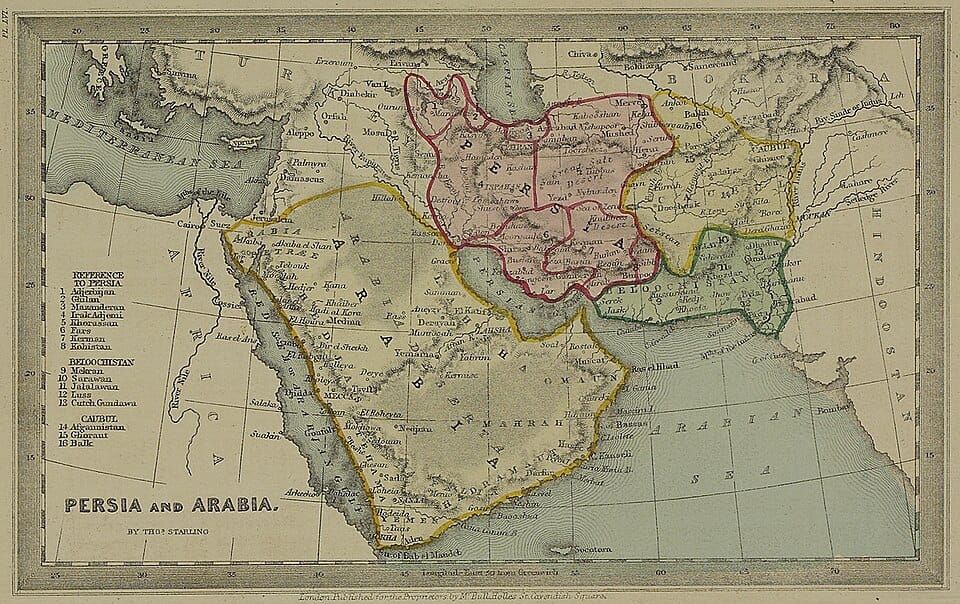
But while the United States and its regional allies can't force Iran to relinquish the Strait of Hormuz, there is another option coming into view. That option will require years of development, billions of dollars and a degree of coordinated diplomacy that the U.S. rarely manages. It also will not resolve the conflict, but instead introduce new pressures that exacerbate existing and emerging conflicts. That option is to render Hormuz less relevant—it's probably not possible to render it totally irrelevant—through the construction of new pipelines. And it's music to Israeli ears.
OK, ALL MY CAVEATS. This scenario is more speculative than I usually prefer for FOREVER WARS. Sources I typically consult about the energy infrastructure of the region also seem to be on August vacation, so I unfortunately can't provide an informed estimate of how many years and how much capital will be required for a new or expanded network of pipelines, refineries and port construction. But there are early indications that policymakers and Gulf capital intend to blunt the Iranian economic weapon through new energy geography. "No country in the world wants to rely as heavily on that transit point [Hormuz] again," a University of Texas energy analyst told the New York Times earlier this month.
Already, the United Arab Emirates intends to expand pipeline construction to its port at Fujairah, outside the Strait. That pipeline has already permitted Emirati oil exports to surpass those of Kuwait, Iraq and Qatar during the war. But the new capacity won't be online until 2027, and the degree of urgency behind the pipeline will depend on the duration of the war in its current twilight phase. (It will depend, as well, on how the UAE handles the challenge Fujairah will pose to its crown-jewel port at Jebel Ali, inside the Gulf.)
Saudi Aramco announced plans to expand its 80s-era East-West pipeline, sending oil for export via the Red Sea at Yanbu instead of the Strait, which would add between one and two million barrels daily to the pipeline’s load. Later this year, a private U.S.-Saudi consortium, MERA Oil, intends to announce a location, seemingly inside a Gulf Cooperation Council (GCC) country—Oman? A super-expanded Fujairah?—for what it calls a "$5 billion integrated refinery and energy export corridor" to route around Hormuz. However, this corridor wouldn't handle nearly the volume of oil intended for the East-West pipeline expansion: MERA only envisions 200,000 barrels per day of export.
And as we've covered at FOREVER WARS, U.S. energy companies and the Trump administration are pushing the Iraqi government toward what a Chevron executive called "a pipeline that’s going to create another export route out of Iraq to world markets," through Syria and Turkey. Trump's Syria/Turkey/Lebanon/Iraq envoy Tom Barrack said last month the point of the Iraqi initiative is to "make the Strait of Hormuz an afterthought."
The UAE, Saudi and GCC-centric plans come with built-in vulnerabilities. Fujairah is well in range of Iranian missiles and drones, and indeed Iran hit the complex in May. The Saudis' East-West pipeline will compel exports either through the Bab el-Mandeb, putting them in range of Houthi attacks, or through Suez—and last month, Iranian drones hit the port of Damietta in Egypt, to show that that route can be targeted as well. That leaves diminishing options, geographically, but expanding ambitions, geopolitically. "The Gulf countries do not want to be dependent on either Iran or the Houthis (in Yemen) when it comes to their oil exports, which are their primary source of income," Israeli Energy Minister Eli Cohen told Reuters last month. "If you create a land route, you bypass both Iran and the Houthis... The best route is through the State of Israel."
Obviously Israel is well within range of Iranian missiles. Also obviously, Iran would far prefer to set Israel aflame than attacking major trading partners like the UAE or the Gulf neighbors it will still have to live with. And a route for Gulf oil that terminates in Israel requires diplomatic rapprochement that remains a step too far for everyone but the UAE (whose hypothetical pipeline route to Israel would run through Saudi territory). But Cohen is speaking to a real opportunity for diversification of energy export routes through the eastern Mediterranean. What Barrack is up to in Iraq testifies to that.
The options in the eastern Med aren't many, and they represent a gigantic economic windfall. They're also absolutely vital for Israel as Israel descends further into pariah-state status. Cohen isn't freelancing here. Nothing will forestall—or at least force governments to think twice about—Israeli isolation like Israel making itself crucial for global energy refinement and export. The other alternatives are Egypt, which collaborates with Israel in a variety of ways, including on Gaza; Lebanon, which Israel is bombing and occupying; Syria, which Israel is bombing and occupying; and then Turkey, a reemerging regional power that Israel increasingly views as an enemy.
Last week, the Israelis attacked a Syrian airbase near Aleppo after it claimed that Turkish troops were set to deploy there. That represented a turning point in deterioration between Israel and Turkey, which Tel Aviv has not in previous decades viewed as a military threat. But Israel began to tilt in that direction after Turkey's client Ahmed al-Sharaa triumphed in the Syrian civil war. You can read good analysis of the escalating Israeli designs on Turkey from Seamus Malekafzali and Owen Jones.
Absolutely nothing will supercharge the incentives for conflict like competition over who will control one of the world's most important energy-export hubs. Right now, the pressures for an eastern-Mediterranean oil terminus favor Turkey, if for no other reason than that it's, well, not committing a genocide of the Palestinians and occupying Lebanon. The more immediately viable routes from Iraq (which will likely also include Kuwait) favor Turkey, as well as Syria, which looks to Israel like Turkey's backyard under Sharaa. That will also make al-Sharaa, a literal former al-Qaeda commander, increasingly important to Washington, which under Trump has embraced al-Sharaa fulsomely. All that gives Israel additional reason to destabilize the eastern Mediterranean and attempt to make itself the alternative to the Strait of Hormuz. Those reasons come at a moment when the viability of U.S. military basing in the Gulf is in question. That offers Israel another way to entrench its relationship with the United States: However politically dicey, Israel would be able to pitch itself as the logical host for American forward operating bases.
It's fair to wonder how the new Mecca Pact between Turkey, Saudi Arabia and Pakistan will respond to increasing Israeli belligerence, especially if there's oil wealth at stake. It's also fair to wonder what an Iranian relationship to the Pact could become in such a case.
As for Iran, remember: the Iranians cannot lose the leverage that Hormuz provides. That leverage, and only that leverage, is what turned the U.S.-Israeli war into a no-win situation for Iran. If the Iranians were willing to extend their attacks to the Egyptian coast to preserve their ability to bottle up Gulf oil exports, expect any new/expanded pipelines, refineries and ports to come under Iranian attack. The Iranians can hit anywhere they like in the Middle East. It will be years before the U.S. stock of interceptor missiles returns to pre-February capacity, let alone expands to the point where they could safeguard such construction. Iran, especially now that it's had the experience of coming under joint U.S.-Israeli attack, will preserve that leverage at all costs, since that's what kept it from annihilation. Either Iran retains its energy-export leverage or it develops a nuclear bomb, now that the U.S. killed the ayatollah who forbade nuclear weapons. Maybe this is an and/or thing now.
I want to be clear about something. I don't think this emerging dynamic is rational. I think it's the sort of irrationality produced when an empire is thwarted, as the U.S. has now been thwarted by Iran, and considers that defeat intolerable. Certainly the oil-producing countries of the Gulf, and importers beyond, have felt the pain of Iranian responses to the U.S.-Israeli coalition. The actually rational things to do would be to negotiate a long-term peace with Iran under the revived terms of the Memorandum of Understanding and to remove without replacement the regional U.S. bases that continue to threaten Iran. But that is not the logic of empire, capital or the hydrocarbon age.
THAT WAS A WHOLE LOT, I know. But don't miss Nick Turse at The Intercept revealing that aggressive reporting on U.S. Central Command can get you blacklisted. Over the past few days, the Pentagon has crushed the editorial independence of Stars & Stripes, the famous "soldiers' paper," conspicuously after it revealed the strains on the Lincoln deployment. I used to work out of the Pentagon press bullpen and have seen with my own eyes the independence, expertise and verve of Stripes reporters. In an age of widespread—and not unjustified, frankly—rejection of legacy journalism, the move against Stripes can seem like small potatoes. But I've also seen, in combat zones, how important Stripes is for troops' ability to inform themselves about critical issues affecting them and their families, as well as the role the paper plays as a feeder system for larger media networks. What they're doing to Stripes is both a disgrace and a demonstration of what the administration would do to all of journalism if it could.
THIS WILL BE the only FOREVER WARS edition this week. I've got a lot of irons in the fire—that is, stories to work on—as we get ready for the 25th anniversary of 9/11. We'll publish a single edition next week as well as we gear up for a September To Remember.
MATT BORS is back like he never left—with a new series of Toxic Avenger! This time, the goated political cartoonist turned comics writer pairs with the excellent artist Felipe Sobriero for Toxic Avenger vs. Noxious Offender, whose first issue drops October 7—but because of the dysfunctional way the comics market operates, you should right now let the friendly staff of your local comics shop know that you want it!
Connor Goldsmith, the telepath behind the Cerebro podcast (and one-half of The Kibitz), makes his comic debut with DID YOU HEAR ABOUT MIMI GREEN?, a fantastic thriller meditating on fame, social media and body horror! You have to read this!
WALLER VS. WILDSTORM, the superhero spy thriller I co-wrote with my friend Evan Narcisse and which the masterful Jesús Merino illustrated, is available for purchase in a hardcover edition! If you don't have single issues of WVW and you want a four-issue set signed by me, they're going fast at Bulletproof Comics! Bulletproof is also selling signed copies of my IRON MAN run with Julius Ohta, so if you want those, buy them from Flatbush's finest! IRON MAN VOL. 1: THE STARK-ROXXON WAR, the first five issues, is now collected in trade paperback! Signed copies of that are at Bulletproof, too! And IRON MAN VOL. 2: THE INSURGENT IRON MAN is available here!
No one is prouder of WVW than her older sibling, REIGN OF TERROR: HOW THE 9/11 ERA DESTABILIZED AMERICA AND PRODUCED TRUMP, which is available now in hardcover, softcover, audiobook and Kindle edition. And on the way is a new addition to the family: THE DISAPPEARED: A FATHER, A SON AND THE WAR ON TERROR.