
First in Gaza, Now in Lebanon, This Is The Destruction She Saw
An aid worker with recent experience in both places talks to FOREVER WARS about the similarities and differences in both Israeli assaults

Edited by Sam Thielman
RECENTLY, A SOURCE for my WIRED piece on Gaza during the false ceasefire reached out to mention that she had returned from Lebanon. She had comparisons to draw with Lebanon's own false ceasefire.
Trapped between a genocide and a regional war, the ordeal of Lebanon, attacked by Israel this latest time on March 2 under the rubric of the Iran War, usually gets treated like a sideshow in U.S. media, if it gets mentioned at all. Yet this most recent Israeli occupation is, once again, backed by the United States. It's upheld by a U.S.-brokered “framework agreement” announced on June 26 that permits sustained Israeli occupation in the south. And it has displaced more than a million people, killed more than 4,300 and wounded more than 12,200. In the wake of the June 26 announcement, Israeli Defense Minister Israel Katz refused to withdraw from Lebanon, "even if there is an American demand to do so." Not that we should expect a meaningful American demand to do so.
The framework agreement does not go to much effort to hide its fraudulence. It conditions Israeli withdrawal on "the verified disarmament of non-state armed groups and dismantlement of associated infrastructure," meaning Hezbollah. Hezbollah was not a signatory to the agreement and denounced it as a surrender document. It might even be worse than that. Amnesty International and several other human-rights groups highlighted a clause renouncing "hostile or adverse actions in international political or legal fora" as representing a betrayal of the many civilian victims of Israeli atrocities. It was a reminder that this aggression is defined by horrifying scenes like the wave of Israeli airstrikes that killed more than 200 people in a single day.
Before and after June 26, Israel attacks Lebanon daily—as it does Gaza. On Monday, Lebanese President Joseph Aoun fretted that Israeli obstinance is preventing the ceasefire from manifesting beyond the piece of paper he signed. I'm sure he's looking for the guy who did this.
My source asked me to refer to her as Rachel. She has more than a decade of experience working in over 50 refugee camps in the Middle East, Europe and South Asia. Late last year, she spent a month at work in Gaza, which is how she was first introduced to me. We spoke shortly after Israel killed a school principal and the three passengers in the principal's car. An edited transcript of our conversation follows.
SPENCER ACKERMAN: Rachel, when were you most recently in southern Lebanon? Was it your first time there?
RACHEL: I was in southern Lebanon in May. I spent several days in the south, and then several more days around Beirut, and in the north, so altogether two weeks. It wasn't my first time in Lebanon. I've been in Beirut, but that was about 25 years ago. It was my first time in the south.
Were you there in your capacity as an aid worker, and if so, what were you doing?
Yes, I went to do field work, so I was there strictly as an aid worker in the south. I had connected with a grassroots NGO [non-governmental organization] that was doing medical outreach to people that were still in their homes in the region. I was also able to visit the people from the displaced regions in the south who are still in the south, but had moved up towards, say, Marjayoun, for example, which is a little bit northward, even though it's still in the south. It is getting attacked also. But the people who were displaced came from places like Khaim, which has been completely pretty much destroyed by the Israeli military.
So I was able to speak to a lot of the families that were displaced and to see what kind of aid they needed. After that assessment, I was able to provide some aid once I did my review. Then, when I was in Beirut, I had also connected with three other grassroots NGOs – all Lebanese, which is what I was aiming for, local groups versus INGOs [international organizations]. Then I was able to go back down south for a full day one more time before I left with one of the NGOs that was from the Beirut region.
[With field work,] usually I'll do two things: I'll just be there to help them as an extra body, whether it's distributions or helping them do medical assessment, like I did in the south, and then I will actually then do my part separately, which is 'Okay, I know this group needs this. There's no group to help them with it. I could fit in here.' I could use the funds to purchase the items that are needed, or whatever help is needed. I did, like I said, medical outreach in southern Lebanon. I also did food distribution. We did food distribution in Beirut. We did some in northern Lebanon, in Akkar. So it really just depends on the need, the schedule, and what the groups are doing, and I'll sort of build off of that.
The amount of snipers shooting in southern Lebanon...were much more rampant... than in Gaza.
What were your expectations for what you were going to see in the south?
In the south, because it was my first time, I actually didn't realize how absolutely gorgeous the scenery is. I mean, it is a really beautiful region, and it's just heartbreaking to see it being so violently attacked and destroyed by the Israeli military. I was overwhelmed by how beautiful it was, I really wasn't expecting that kind of scenery.
Regarding the violence and the attacks, I knew they were happening. I mean, I've seen the videos and on social media what people post, so I was expecting it to be similar to what I had experienced in Gaza. It was interesting for me to compare what I saw in Gaza versus what I was seeing and experiencing in southern Lebanon. There were some similarities, and then there were also some interesting differences.
What were the similarities?
The similarities would be the perpetrators, which would be the Israeli military, and the tactics that were used, and the weapons that were used to implement the invasion and occupation.
So it was the same kind of weaponry. You had the tanks, you had the fighter jets, you had the snipers. What you didn't have was obviously the navy ships in Gaza. Where I was [in Gaza], I could see the navy, this ship across from where I was, daily. They would be shooting from their ships. Obviously, in southern Lebanon, that's not what it was, but those would be the similarities. But honestly, there were more differences. The differences were the ones that actually stuck out to me the most.
So what were those differences?
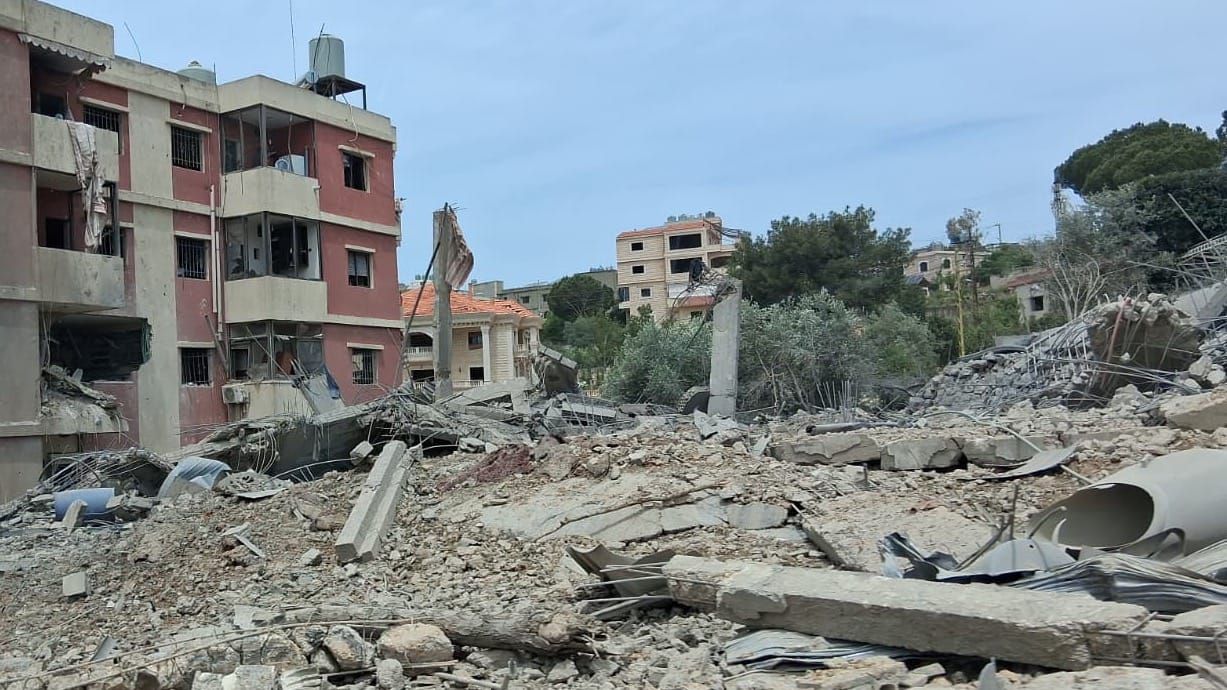
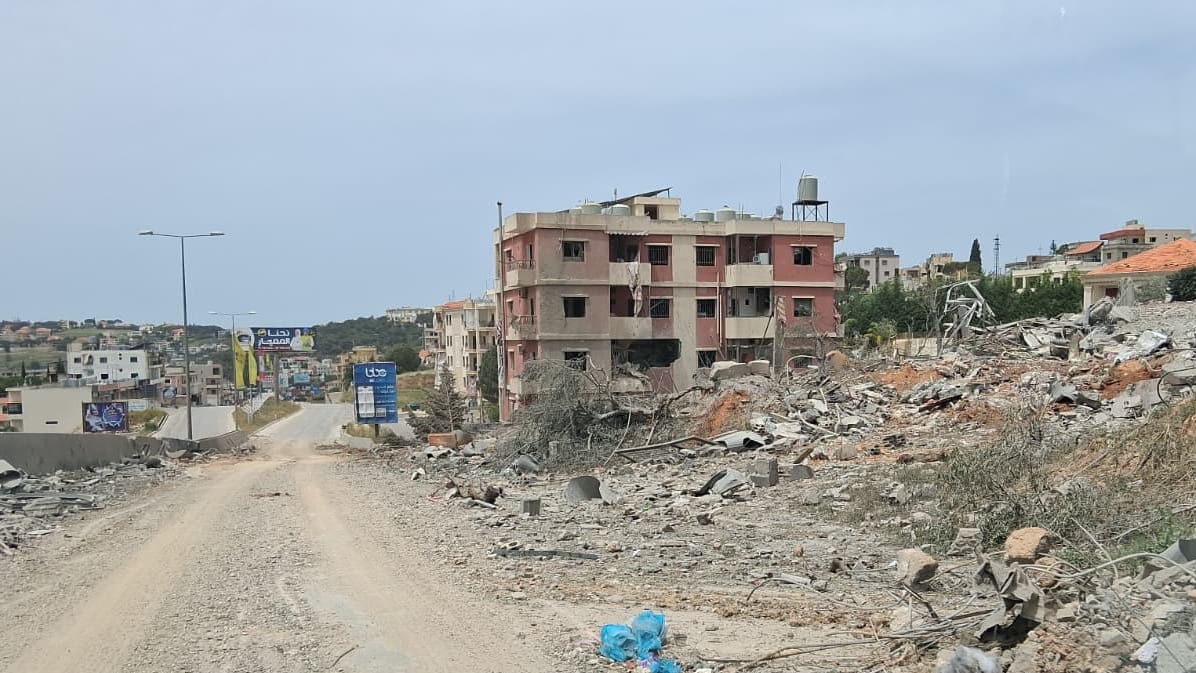
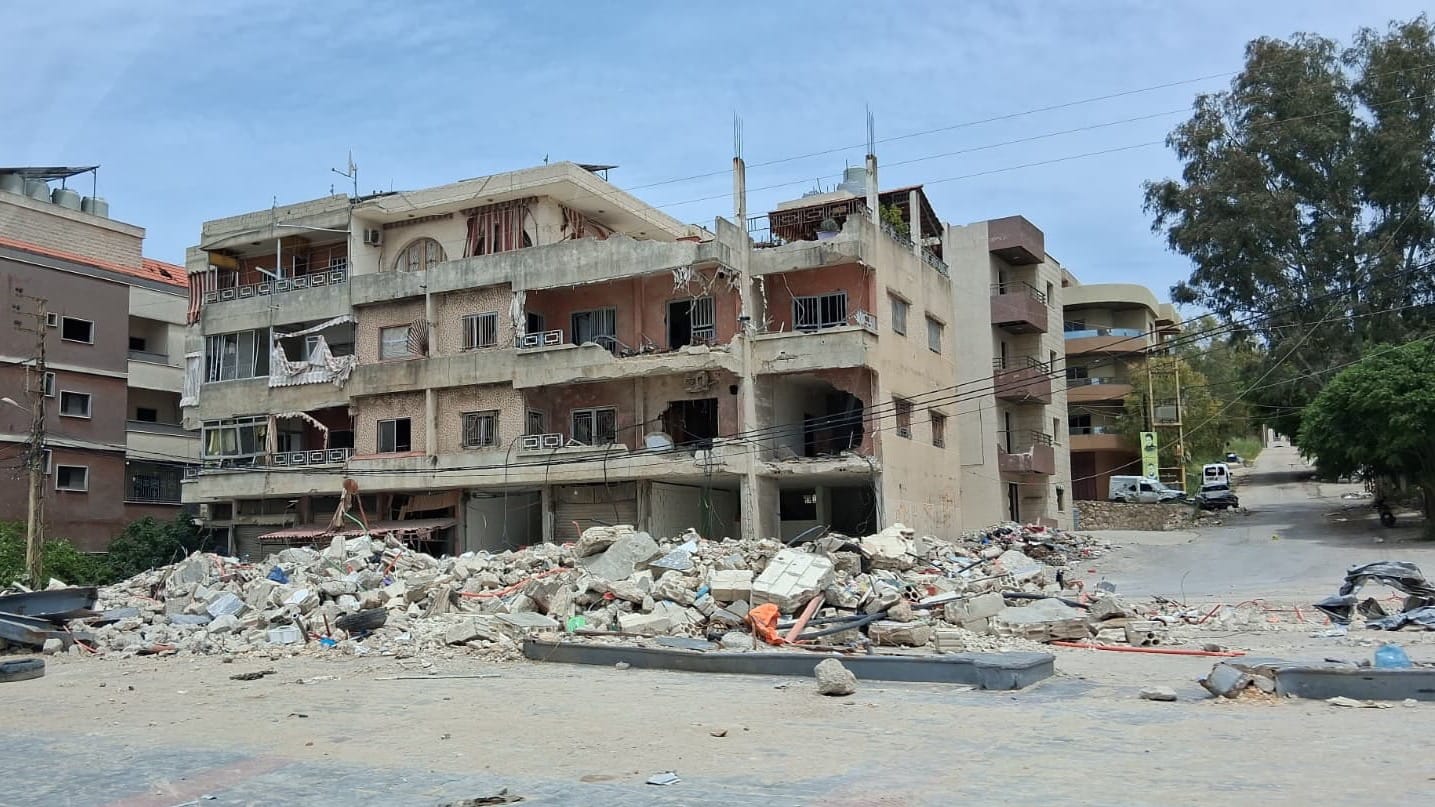
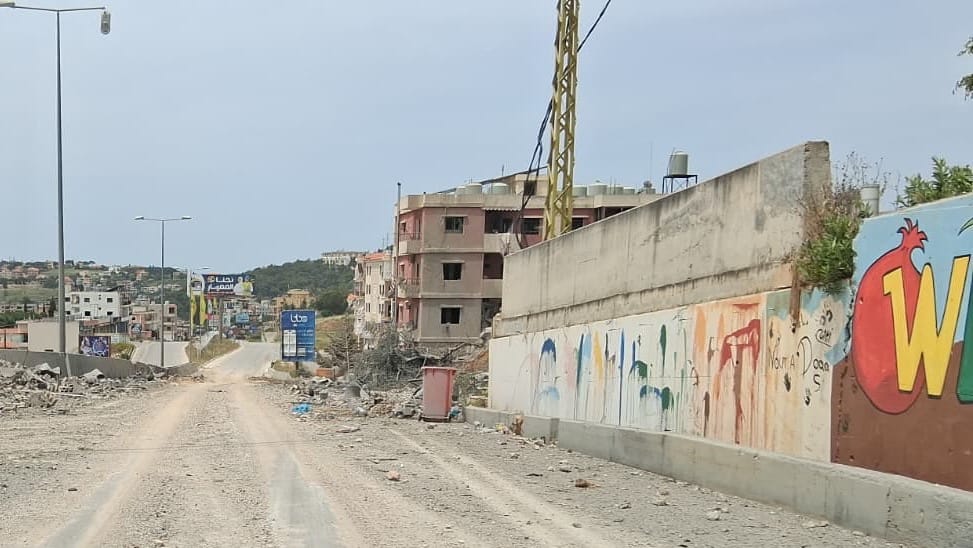
In Gaza, you had a scorched-earth policy. Gaza is heavily dense with buildings, so the Israeli military had pretty much wiped out the vast majority of the buildings. It was a lot of very random, sporadic, overall blanketed carpet bombing. In southern Lebanon, I'm assuming they want to, at least on some level, preserve the environment because it's very rich in soil, a very beautiful region. So, what they did in southern Lebanon, the Israeli military would have much more targeted attacks on buildings or towns, rather than just completely carpet bombing the entire area, like they did in Gaza. In Gaza, everything was pretty much leveled. In southern Lebanon, the landscape was fairly preserved, but when you go into the different towns, that's where you would see the destruction. So that was a really obvious thing for me to notice right away.
The other thing was the amount of snipers shooting in southern Lebanon. They were much more rampant and just almost random in southern Lebanon. I would constantly hear the tt-tt-tt-tt-tt, and you could tell they're definitely snipers. It wasn't like an automatic, like from a tank or something. Also the displaced people I spoke to had told me that they, some of them, had left the areas they were in because of the sniper shooting. They would shoot so randomly that a lot of people just going out to the store or going to tend to their garden or their child was going somewhere would get shot and killed. They were so afraid of the snipers – just feeling like it was target practice. Or not even really a target, it was just: 'there's a space, they're just going to shoot into it.' In Gaza, the snipers were pretty restricted to where the Israeli military was, which is in the yellow line, so there would still be people getting shot and killed by snipers, but it would be mainly the people who are closer towards the yellow line versus further in [toward the Mediterranean].
Another difference would be—this may sound really weird, I'm not military, so I don't know if this is an actual tactic, or for what purpose—but in southern Lebanon, the fighter jets flew a lot lower to the ground versus what I was hearing and seeing in Gaza. That was something that they love to do, especially at night, so the amount of airstrikes between Gaza and Lebanon were fairly the same. During the day, I counted around the same amount of airstrikes. At night, [there were] heavy increases in air strikes. Just because it's again, it's a tactic, it causes chaos, it causes more fear. So, at night is when you'd get a very heavy increase of airstrikes. So they actually were fairly similar in both areas.
You told me, when we last spoke, about a night in Gaza when you counted 21 airstrikes in about four predawn hours. Was the density of strikes in Lebanon similar or different?
On my last night of staying in the south before I went to Beirut to do work there, and my last night staying there, after several nights, from about 7 p.m. till about 5 a.m. or so, I counted 40 or 41 airstrikes around me. So just doing simple math, it would be about the same, the same rate there between Gaza and what I was counting in Lebanon. Having been in both locations at night, for sure, the amount of air strikes were pretty similar between both places, very heavy.
In Gaza, in addition to the planes, in addition to the artillery strikes, in addition to the naval strikes, Israeli drones are often cited as ubiquitous, both as a lethal weapon and a psychological one. What were you able to observe about drones in Lebanon?
In Beirut, a lot of people were surprised when I told them there was a drone or two constantly flying above, surveilling the Beirut area. It was really loud where I was, at a particular place in Beirut. It was pretty much nonstop.
Two things make this odd. A, it's supposedly during a ceasefire. But again, all the violence I witnessed in southern Lebanon during the ceasefire was the same thing that I witnessed in Gaza during that supposed ceasefire. And then B, also you have a foreign nation occupying the sovereign airspace of another nation with their surveillance equipment. And Lebanon is actually not allowed to do anything about it. This was really odd and disturbing to me. People were walking around, watched by a drone that does not belong to their government. It's really unsettling.
Were people worried that this will become normal? [Journalist's note: By "this," I had meant the drone presence, not Israeli aggression writ large. But Rachel was cooking with her answer and I didn't want to interrupt. It was my fault for phrasing my question vaguely.]
Well, for the Lebanese, being neighbors to Israel, there was always a sense of normalcy with how Israel behaves. They know they're unpredictable, they know they're violent, they've been dealing with their instigation and their occasional invasions for decades. This is not anything new to the Lebanese.
But they are very worried about what's happening this time around, just because they've seen what's happened in Palestine, they've seen especially what's happened in Gaza. They're worried that this is eventually going to happen to them. They're seeing that the south is already being taken over slowly, but it's increasing. And they saw that they bombed the hell out of Beirut in several minutes, killing over 200 people, and the world has yet to stop anything. So they are worried. They want to be united, they know they have to be united, but they are very concerned—and I got this question a lot, especially in the south: people would ask me in Lebanon, 'Is it the same as what you saw in Gaza?' I don't know if they want me to reassure them that it wasn't, or to give them just some sort of warning as to what might come. But I got asked that question a lot.
We hear a lot in the West about the scale of the refugees, over a million people displaced, to the point where it can feel like a numb statistic. What were you able to observe about the conditions of displaced people? Where are they able to go and take shelter? We had spoken earlier this year about people in Gaza finding shelter, especially along the coastal road, wherever they could, whether it was in bombed-out buildings or the tents. What are the living conditions of these million people who have been forcibly removed by an invading power seeking to be an occupier?
The majority of the displaced in Lebanon will be around the Beirut area. You have some that went from the south all the way up to Akkar, which borders Syria up north. That usually took them four or five days to get to. I also went up there, and I spoke to some of the displaced up there.
They'll destroy the buildings in the towns, rather than obliterating the natural landscape, because ultimately that's what they want to preserve for their own occupation.
[Conditions] really depend on where you are. If I spoke to the displaced in the south, they were primarily [sheltering] within churches. I was at a predominantly Christian town that had one mosque, so some people were staying in churches, some were staying in the one mosque, some were staying in schools—schools now no longer function, because they have to house the displaced.
Around the Beirut area, if some are able to financially afford a cheap room or a cheap apartment, they would. But the majority can't, or if they can, they [won't be able to for long]. So there, too, areas for the displaced are, again, churches, mosques, schools, some were staying in tents. It really varied from place to place, but overall they encountered the same issues. They were getting some food distributions, like cooked food and food boxes. It's very minimal but there were some organizations that were also handing out mattresses, that were handing out blankets, just trying to help with the most basic necessities. A lot of folks lack showers, bathrooms. It's really hot in Lebanon, so they're having to deal with the heat. A lot of these everyday occurrences that we don't really think twice about—because we have everything that we need at our disposal—once you become displaced, everything becomes an urgent need, everything becomes difficult to come by. It's a really, really big problem in Lebanon.
When it comes to the displacement in Lebanon versus the displacement in Gaza, the main difference I want to really recognize here is that the displaced in Lebanon still have freedom of movement. Thankfully, they're able to go up and down the country, trying to find shelter, trying to find relief. In Gaza, that is not the case. They are literally imprisoned in a concentration camp, and their every movement is practically dictated by the Israeli military. They cannot escape.
When it comes to nutrition, it goes back to how much control the Israelis have in Lebanon versus what they have in Gaza. In Gaza, they have full control of what comes in and what comes out. Whatever nutrition is inside is only what they've allowed to enter, and it's very minimal, regardless of what they've been saying. In Lebanon, thankfully, that is not the case. Although the displaced are really struggling to maintain everyday life, most will at least have access to aid that provides them food. Is it up to the standards of what they should be having every day? No, absolutely not.
In Gaza, the Israelis target the infrastructure necessary for sustaining life, whether it's the medical infrastructure, the educational infrastructure, the water infrastructure. Are they similarly attacking infrastructure in Lebanon?
So in a reflection of what they've been doing in Gaza, the Israeli military in Lebanon has, repeatedly, targeted and killed medics in southern Lebanon, and they have attacked hospitals, as well. As of now, primarily they are targeting medics because they are the first ones to respond to an emergency. We've seen evidence in southern Lebanon of double-tap strikes. What they'll do is injure or kill a person to bait in the medics, and then they'll hit the medics. That's been caught on video. They did attack some water sources while I was in the south. But for the most part, in my opinion, they're trying to preserve as much of the landscape as they can, because that's actually what they want.
To take it over, you mean?
Yes. Luckily for Southern Lebanon, the towns are not as densely populated [as Beirut or Gaza]. So they'll destroy the buildings in the towns, rather than obliterating the natural landscape, because ultimately that's what they want to preserve for their own occupation. Compared to Gaza, [where Israel implemented] a scorched-earth policy, you could tell that there's a different tactic they're using in the south of Lebanon. There's a different approach that they're taking to how they're invading and occupying the southern region. But the one thing they have kept the same as Gaza is the targeting of medics and journalists in southern Lebanon.
What would you say about the state of people's regard for the government during this ceasefire?
Oh, you had a mixed bag with that. [laughs] It was very much a mixed bag.
A lot of people, practically everyone that I've spoken to, are aware of the corrupt politicians in the government. Unfortunately, Lebanon's economy has been suffering for quite some time now. They don't have a military that's anywhere remotely near the capabilities of the Israeli military. The poor young men that I would see in the south from the Lebanese military, they're trying their hardest, but they're incredibly limited. Not only what they can do, but what they're allowed to do.
When I asked the question—and I know the answer, but I wanted to ask directly to the people there—why isn't the government allowed to, say, shoot down that drone that's flying over Beirut? I mean, this is their sovereign airspace, why is this okay? And they tell me: because of past agreements that they've had with the U.S. or Israel. But also let's just say they did, let's say they broke an agreement they made and they shot it down. That would give Israel even more of a green light to go ahead and do what they want.
And everyone's aware of that. Everyone's aware that they're living under the shadow of Israel. The Lebanese people are very good at wanting to be united, very proud of their heritage and their culture and their history. They want to be united and fight against the state terrorism that Israel is implementing. But deep down there's a reality that they're very worried about. That reality would come out when I'd have one-on-one conversations with people—not when people were in a group. It's the same thing in Gaza. When you speak one-on-one, people are more willing to let their wall down and speak more vulnerably. That is in absolutely no way to minimize or dismiss people's willingness to take a stand for their country or their people. What I want to remind people of is that we need to humanize the Lebanese, we need to humanize the Palestinians, and not constantly hold them up to this ridiculous standard of resiliency that that we're forcing them to be in.
These are families who have lived in those areas for generations and centuries. Their country and their way of life are being invaded, and their lives are being destroyed. They want to fight for their country, but unfortunately, foreign hands have a lot more to say about it.
WHAT HAPPENS WHEN farmers and other residents of rural Ohio don't want weapons corporations to buy up the land around them and choke off their access to resources? Companies like Anduril purchase state legislators to cut off the democratic channels available to the farmers for limiting those land purchases. Taylor Barnes at Instick has a story you should devote time to reading. It put me in mind of locals opposed to data-center construction getting brutalized by police at city council meetings. Buying lower-level politicians probably has a greater return-on-investment.
THE TA-NEHISI COATES piece on Kamala Harris, Gaza, the black political tradition and Democratic complicity in genocide really is as good as you've heard. I had to wait until Vanity Fair sent around an unpaywalled version, so here's one for you.
'CITIZEN VIGILANTE' STRIKES me as something that could take up an entire chapter in a future edition of REIGN OF TERROR. Variety's review might have mentioned the long lineage of western entertainment demonizing Muslims. '24' walked so 'Citizen Vigilante' could run. For reasons that I'll elaborate on in due time, it would be… interesting… to watch the reaction to a socialist vigilante story and compare it to that received by this fascist vigilante story, which is being promoted aggressively by the world's wealthiest man.
Connor Goldsmith, the telepath behind the Cerebro podcast (and one-half of The Kibitz), makes his comic debut with DID YOU HEAR ABOUT MIMI GREEN?, a fantastic thriller meditating on fame, social media and body horror! You have to read this!
Buy my friend Laura Hudson's comic book Exploit!
WALLER VS. WILDSTORM, the superhero spy thriller I co-wrote with my friend Evan Narcisse and which the masterful Jesús Merino illustrated, is available for purchase in a hardcover edition! If you don't have single issues of WVW and you want a four-issue set signed by me, they're going fast at Bulletproof Comics! Bulletproof is also selling signed copies of my IRON MAN run with Julius Ohta, so if you want those, buy them from Flatbush's finest! IRON MAN VOL. 1: THE STARK-ROXXON WAR, the first five issues, is now collected in trade paperback! Signed copies of that are at Bulletproof, too! And IRON MAN VOL. 2: THE INSURGENT IRON MAN is available here!
No one is prouder of WVW than her older sibling, REIGN OF TERROR: HOW THE 9/11 ERA DESTABILIZED AMERICA AND PRODUCED TRUMP, which is available now in hardcover, softcover, audiobook and Kindle edition. And on the way is a new addition to the family: THE DISAPPEARED: A FATHER, A SON AND THE WAR ON TERROR.