
When The War Goes AI, The Data Centers Will Be Targets (f/Engadget's Devindra Hardawar)
We talk Anthropic, OpenAI, Iran and the mil-tech oligarchy. Children will be sent to protect data centers the way their fathers were sent to protect oil fields

We talk Anthropic, OpenAI, Iran and the mil-tech oligarchy. Children will be sent to protect data centers the way their fathers were sent to protect oil fields
Edited by Sam Thielman
AS I CHECKED TO SEE if my appearance yesterday on Engadget's podcast was out yet, I saw from the Financial Times the dawning of a certain recognition.
Over the past decade, a sea change within the military-industrial complex has occurred. It has benefited a rising class of big-data, artificial-intelligence and (soon) autonomous-weapons entrepreneurs, increasingly backed by venture capital and private equity, who see government contracting as their path to profit at scale and the political dominance that accompanies it. One of its most recent manifestations is in the Pentagon's frontier AI contract.
As we saw with last week's fracas over Anthropic, much of this development remains unresolved. But the opportunism of OpenAI's Sam Altman over the frontier AI contract leaves no doubt that both the AI firms and the Pentagon intend to integrate, and durably. A great deal of the infrastructure of this integration, both technological and financial, is in booming data center construction in the U.S. proxy states in the Arabian/Persian Gulf. There it remained when the Trump administration and Israel launched their war of aggression against Iran.
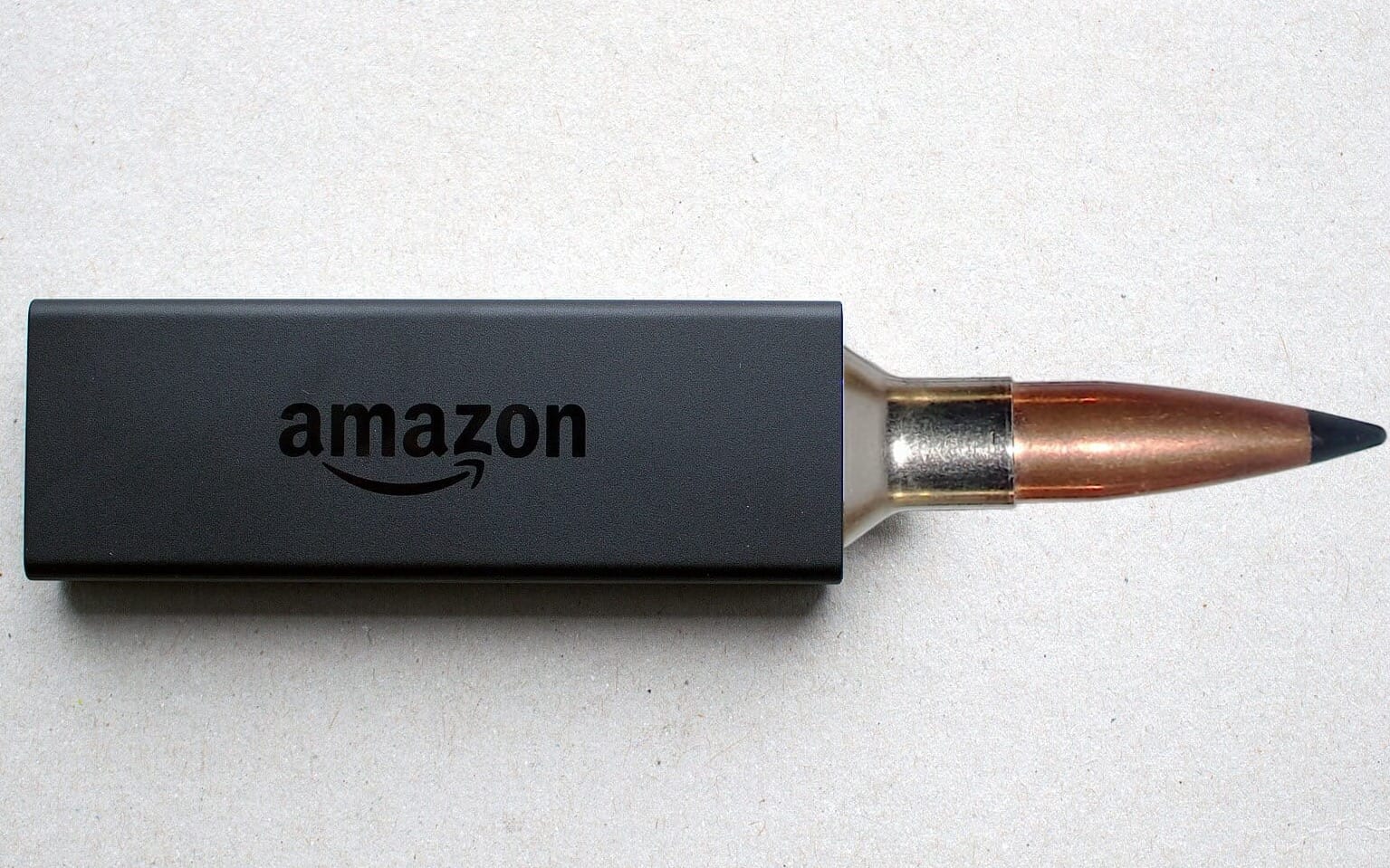
Iran's response—the guiding strategy of which we discussed on Tuesday; check out that edition if you missed it—indicates that Teheran takes U.S./proxy AI integration seriously. It sent drones to attack Amazon Web Services data centers in Bahrain and the United Arab Emirates, targeting enemy cloud storage capability. (Iran claimed Thursday to have attacked Microsoft centers as well, but the company has so far reported no outages.) "We are working to restore full service availability as quickly as possible, though we expect recovery to be prolonged given the nature of the physical damage involved," Amazon said. The FT marvelled: "The strikes mark what is believed to be the world’s first military attack against the US 'hyperscalers' that dominate the global cloud computing market."
I say the recognition is dawning because this isn't really the first time the data centers have been hit. During last year's Twelve-Day War, the Iranians hit a Microsoft data center in Be'er Sheva. The Islamic Revolutionary Guards Corps argued that Microsoft was a combatant. Microsoft's "close collaboration with the Israeli military" made it "part of the system supporting aggression - not merely a civilian entity." Pentagon AI integrationists, take heed.
But last year's missile strike was relatively obscure. The smoke rising from Amazon facilities in the Emirates is not. "A theoretical scenario has become a concrete precedent," Kristian Alexander of the Rabdan Security and Defence Institute in Abu Dhabi told Rest of World. "This does not necessarily introduce a new risk so much as it validates what was already in every serious threat model." That seems like a shot at the much-voiced Emirati attitude of "why do they hate us and how could they possibly attack us." After 15 years of the UAE exporting violence to Libya, Yemen and Sudan, that attitude is reminiscent of, well, the United States after 9/11.
Validating Alexander, Mona Yacoubian (at FOREVER WARS, we love a Yacoubian) at the most establishment-aligned Washington security think tank, the Center for Strategic and International Studies, pretty much called it on the eve of the Iran War:
[T]he United States diffuses AI technology into the Gulf to ensure sectoral dominance and broader influence, but creates dependence risks when infrastructure sits abroad. In previous conflicts, regional adversaries such as Iran and its proxies targeted pipelines, refineries, and oil fields in Gulf partner states. In the compute era, these actors could also target data centers, energy infrastructure supporting compute, and fiber chokepoints such as the Bab al-Mandab Strait off the coast of Yemen, which hosts critical undersea data cables linking internet connectivity in Asia and Europe.
That leads Yacoubian to an insight that I don't think has sunk in yet:
The United States will struggle to win the global AI race without deepening exposure in a volatile region it officially seeks to deprioritize. Moreover, Gulf states will continue to be central to the landscape of global computing power with or without the United States, creating incentives for Washington to deepen Middle East partnerships. U.S. policymakers should therefore prepare for a new Middle East-focused national security priority centered on compute, data centers, and AI interdependencies. If the United States truly believes compute is the new oil, it should recognize that, like oil, this strategic resource will bind Washington to the Gulf much more tightly than current doctrine acknowledges.
Translated from the policy-whisperer: The integration of AI within the U.S. military—and, sure, the broader economy, but especially the military—will keep the U.S. fighting war after war in the Middle East to secure its data infrastructure. Our children will be sent to die so the militias arising from the Failed States of Persia cannot threaten Andy Jassy's server warehouses in the shadow of the Burj Khalifa. With so much on the line, the AI oligarchs' push to make sure they don't leave their investments vulnerable to democracy makes a whole lot of sense.
Anyway, that's a long way of introducing my conversation about Anthropic, OpenAI, the Pentagon and the Iran War with Engadget. Thanks very much to Devindra Hardawar for inviting me on. The podcast version will have unglitchy audio—it's not my fault my wi-fi connection isn't built for podcasting; if you don't like it, podcasters, buy me something better!—but a lot of people like to watch videos of heads talking, so maybe that's you:
Finally, just to make sure everyone saw. "If we can have a civil war, great. Israel couldn’t care less about the future . . . [or] the stability of Iran," is how an Israeli think-tanker summarizes Israel's endgame, much as I wrote for Zeteo this week. Claude is crucial for target generation in the Iran War, which both helps explain why the bombing is so intense and validates the suspicions I voiced in FOREVER WARS on Thursday, before the war began, though clearly I underestimated the ease and rapidity of LLM-based targeting. And now, with Iran sending defiant messages about repulsing U.S. ground invaders, Trump has (for now) pivoted away from talk of regime remnants like the IRGC surviving the war and toward demands for "unconditional surrender" and the right to select Iran's next rulers.
Buy my friend Colin Asher's book The Midnight Special! Yesterday he finally got me a galley, and the way this book opens—you're just not ready for this.
Buy my friend Laura Hudson's comic book Exploit!
WALLER VS. WILDSTORM, the superhero spy thriller I co-wrote with my friend Evan Narcisse and which the masterful Jesús Merino illustrated, is available for purchase in a hardcover edition! If you don't have single issues of WVW and you want a four-issue set signed by me, they're going fast at Bulletproof Comics! Bulletproof is also selling signed copies of my IRON MAN run with Julius Ohta, so if you want those, buy them from Flatbush's finest! IRON MAN VOL. 1: THE STARK-ROXXON WAR, the first five issues, is now collected in trade paperback! Signed copies of that are at Bulletproof, too! And IRON MAN VOL. 2: THE INSURGENT IRON MAN is available here!
No one is prouder of WVW than her older sibling, REIGN OF TERROR: HOW THE 9/11 ERA DESTABILIZED AMERICA AND PRODUCED TRUMP, which is available now in hardcover, softcover, audiobook and Kindle edition. And on the way is a new addition to the family: THE TORTURE AND DELIVERANCE OF MAJID KHAN.