'This Big Truck Is Coming': Iran After The Maduro Kidnapping
The distinguished journalist Tara Kangarlou sees a U.S. attack on Iran as all but certain now
The distinguished journalist Tara Kangarlou sees a U.S. attack on Iran as all but certain now
Edited by Sam Thielman
IT WAS TEMPTING to see bluster in Trump's Friday post that the U.S. military was "locked and loaded" to use Iranian state repression of protests as an excuse to resume the June war. But a few hours later, Trump ordered Delta Force to kidnap Nicolas Maduro from Caracas. A few more hours after that, Defense Secretary Pete Hegseth said that just as Maduro had had his chance, so too has Iran.
Ever since the Biden-enabled Israeli assassination spree of 2024, some in U.S. foreign-policy circles have champed at the bit to destroy a clearly weakened Islamic Republic. That clearly fueled the U.S.-Israeli bombing of Iran in 2025. With Maduro kidnapped, and the U.S. not yet experiencing any resistance from the Venezuelan military, the vistas of imperial possibility are opened wider than they have been since 2003.
Lindsey Graham is egging Trump on to overthrow the Iranian government. Stephen Miller, in a rant that shows how triumphalism hits like coke, wants to seize Greenland from Denmark. We'll get to Cuba in the next item. The point is that they feel like they can do anything. Welcome back to the days after the Fall of Baghdad. The Bush people didn't expect any consequences either. Already, Saturday's Wolfowitzian pledge that Venezuela will pay for its own reconstruction has given way to Monday's admission that you will pay for Chevron and the rest to extract the oil wealth for their own benefit.
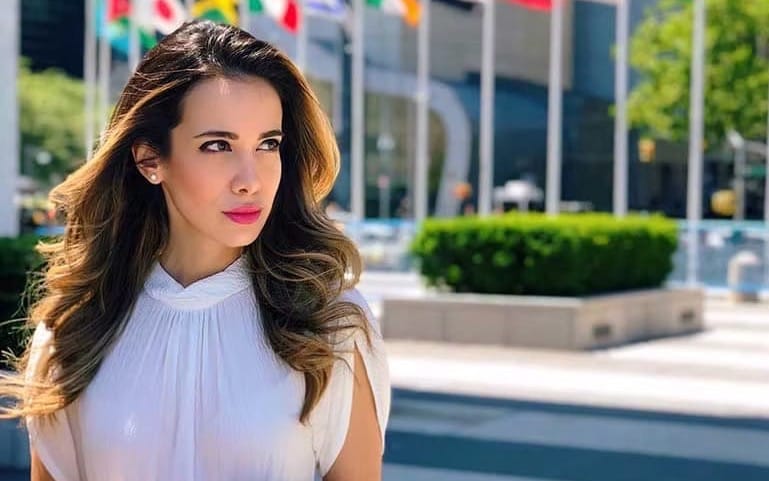
I don't have any visibility inside Iran. To better understand this latest wave of protest, regime crackdown and how it all looks after the Maduro kidnapping, I reached out to my friend Tara Kangarlou, a highly distinguished foreign correspondent who's reported for CNN, al-Jazeera, Time and other outlets. She's also an adjunct professor at Georgetown University and the author of The Heartbeat of Iran. Her work centers the Iranian people rather than caricaturing them or converting them into imperial fodder for Americans to "save."
Tara lived in Iran until she was 17 and is now unable to return because of her work as an American journalist. She opposes a U.S. or U.S.-Israeli attack on Iran, though in the aftermath of the Maduro kidnapping, considers it practically inevitable. "The Iranian people are capable of decision-making and ultimately the power needs to be put back in their hands," she emphasized to me.
"This big truck is coming, and it's going to hit this country," Kangarlou continued. "But what the United States and Israel do is never for the benefit of people in those countries. But the Iranian people are so desperate." An edited version of our interview follows.
Spencer Ackerman: Tara, what is this wave of protests seeking to achieve? What is your sense of their momentum? And what are the similarities and differences to the 2022 Mahsa Amini protests?
Tara Kangarlou: First of all, what these protests are telling us over a week into them is, once again, that the Iranian people are unhappy with the Islamic regime. This time around, unlike what happened in 2022 after the death of Mahsa Amini in morality-police custody, these protests started as a result of essentially the collapse of the economy, mind-boggling prices, a financial crisis that, Spencer, everyday Iranians can't comprehend. The people can't live in Iran anymore. There is no longer a middle class. You wake up in the morning and you see a dozen eggs be $5. You go to bed, that $5 is turned into $7. The next morning, it's $10. That's the reality on the ground.
So this time around, the protest started as a result of the staggering price hikes, the collapse of the rial and so on and so forth. And it started in the bazaar in Tehran, which is really the hub of business, the shops, and really the people who control the market. But then it evolved and scattered into other cities, large cities and small cities around Iran. Now, what you see today, again, a little bit, a little over a week into the protests, Tehran is somewhat quiet, but other cities are still going.
But again, the difference between Mahsa Amini protests and also prior to that, in 2019 and 2018 protests that were met violently with a regime crackdown—which, by the way, at the time, were also because of the financial crisis. This time around is once again because of the financial crisis, but all together, every single protest in Iran, Spencer, is because ordinary citizens are unhappy with the regime, with the way they've been behaving over the years, whether it be socially, politically and with the mass corruption that exists in Iran.
Is the economic situation something that the protest wave blames exclusively on the regime, or do they also blame Western sanctions?
Yes, they definitely blame sanctions. But the discontent, disillusionment, anger toward the Islamic regime, is so high that they see the impact of that in their daily lives. In Iran, Spencer, right now, you have an extremely wealthy minority of regime insiders who are tied to the government, or their offsprings are tied to the government. And these folks are millionaires, and quite frankly, some of them billionaires. This is a tiny minority of the wealthy who have made enormous wealth on the back of the Iranian people. But also, sanctions have allowed them to amass this amount of wealth. Sanctions have allowed them to sell the oil on the black market, to create various black markets for anything you can imagine, whether it be cooking oil, whether it be medicine, whatever you can imagine in Iran – dairy – because of the sanctions, topped with the corruption that they've created.
So on one hand, the regime and the people attached to the regime are so severely corrupt that they've monopolized various industries and they're controlling the economy. And the other hand, the Iranian market isn't part of the international [market]. It's isolated. People are living under sanctions, and because of that, ordinary people cannot have any engagement financially with the rest of the world. So let's say a small business owner who wants to independently have any transaction with the West, that transaction cannot happen because Iran is not part of the global banking system, right? So it is a bit complicated. But yes, international sanctions, U.S. sanctions, have a huge impact. But domestic corruption is part of that.
So, in addition to all of this, you now have the volatility introduced by the U.S. kidnapping Maduro and decapitating the Venezuelan regime. What do you expect the impact to be on Iranian protesters of Trump publicly rejecting the Venezuelan opposition? And, while Rubio is walking this back somewhat, ruling Venezuela outright, on behalf of oil multinationals? I imagine that's something that speaks quite directly to a whole lot of Iranian history, regardless of what the average Iranian thinks of the regime.
Yes, absolutely. I'm going to come back to that. But I think there's an important nuance that is worth bringing out, which speaks to the difference between the government's dealing with these protests versus the Mahsa Amini protests and the one prior in 2018, 2019, and even the one in 2009.
Right now, the Iranian regime is facing a two-fold pressure point, one from abroad, one domestically. On one hand, it has to contain the protests, and on the other hand, in tandem, it's being targeted, quite frankly, by Donald Trump and Benjamin Netanyahu, who essentially came out and said, you know, we're ready to attack if protests become violent and deadly—which, by the way, they have, I think obviously numbers change by the minute, by the day, but I think so far, at least 29 people have been killed. And also the fact that at the Mar-a-Lago meeting that they had, they said at any moment, we're ready to attack Iran. So the Iranian regime is facing pressure domestically with the protests and simultaneously from abroad, and this is something that they didn't have to deal with in 2022, and other protests. So that's very important.
The second thing is, more than ever, the Iranian regime is divided. There's many factions, and everyone is fighting and peddling for their own survival, okay? That's also an important reality to pay attention to, because if, let's say, the Supreme Leader is taken out, how are these different factions, how are these regime insiders going to deal with one another, because, fundamentally, they're all clinging on to power and financial gain, okay? And how they're going to survive is a big question.
And coming back to your question about, you know, Iranian people looking at what happened in Venezuela pertaining to the United States ousting Maduro, essentially, for the country's oil. It's really a playbook that we've seen before. Even though the Iranian people, I would say, Spencer, in the entire Middle East are some of the most pro-West, pro-American population, they also are very well aware that the United States has its own interests at heart. They are very well aware of the history—the 1953 ouster of Mohammed Mossadegh, the democratically-elected prime minister of Iran. They're very well aware of the ouster of Reza Shah during the Second World War, sending him to exile and putting his son in place. They're very well aware, and they're also very well aware of who took the Shah out of Iran out in '79 and suddenly you have a figure like Khomeini coming out of nowhere, a cleric, coming and taking over. It cannot be done without the support of foreign actors, right?
And so Iranians are very well aware of this, and they never have looked outward. And that's really the sad reality. They know that no one else is going to save them, and that's why, I mean Iran, some of the brightest and most capable civil servants, educators, activists, lawyers, they're all in prison in Iran. And if they're allowed out, Iranian people in Iran can determine their own future. So Iranian people are very well aware that the United States is serving its own interest wherever they go. But unfortunately, at this point, like in many other countries, people are suffocated so much that they just want to get rid of the Islamic regime. And if you talk to the ordinary people in Iran, they're so tired that they'll tell you, just get rid of them, right? Just get rid of them. The same as if you speak with many Venezuelans, they would say, just get rid of this Maduro. Just get rid of this Maduro, we're so tired, he's a dictator. But what comes the day after is the question, and I think people who are so choked to the brink of collapse sometimes don't see that, right? And it's the same as Syria. People were so fed up and tired of Assad that they would take a former jihadi militant, right? It's that desperation that makes people happy with choices that in a normal, you know, circumstance may not at all be justified, if that makes sense, right?
I'm so old that I remember the first days after the Fall of Baghdad, Iraqis celebrating the end of Saddam Hussein, and then quickly recognizing that they had a much bigger problem on their hands.
Yeah, no, exactly. So that's why, again, if you talk to Iranians in Iran, and I touched on this briefly, but many think, right, sort of a less messy option would be if the Supreme Leader is taken out, [whatever] that may look like. And they're projecting that they'll have someone from the inside take the helm, because the Iranian society, economy, political system is quite complicated. Iran is a country of 90 million, right? It has twelve air, land, and sea borders. It is not a small country. I mean, Venezuela is a nation of 29 million. [The popular sense is that] Iran needs someone who understands the country and is connected to the society one way or another. And you know, people believe that someone from the outside can't manage without creating a mess.
So a less messy situation is such that someone from the inside comes, without the Supreme Leader in power, and says, "Okay, now we're going to deal with the West." Because let's face it, if the sanctions are lifted, okay, if Iran re-enters the international commercial space, so much of Iran's economic problems would be solved. Foreign investment can come and there is no foreign investment in Iran. China has been infiltrating that space. And there's an enormous opportunity. I mean, I'm not good with numbers, but these are out there. These facts and numbers are out there. If Iran rejoins the international economy, forget its oil, forget the oil money, for six months, just exclude the oil, the country's GDP will go up at least by four percent. And that tells you so much about the potential of Iran. And I always say that for the West, the biggest asset is the Iranian people, because you have a society that is highly educated, highly pro-West, highly capable, Spencer. For every single thing that we have in the United States, whether it be Netflix, DoorDash Uber, the equivalent exists in Iran, and these are what this young generation have created under sanctions.
So the less messy scenario, whatever Mr. Trump wants to do, because they're clearly doing something, they're cooking up something, is to potentially get rid of the Supreme Leader and have someone from the inside come and open up the country. That also would be a win-win for the United States, because, again, they're in Venezuela, they're going to get a lot of oil, as you and I both remember, drill, baby, drill, right? They want Iran's oil as well. Iran's oil is not just in the Gulf, by the way. Many people don't know this. You know, near Qom and Isfahan, there's a lot of untapped oil. There's a lot of untapped natural resources in Iran. And if the United States doesn't rush in, who's going to rush in? Russia and China. And by the way, what they did with Venezuela [has the effect of checking] China as well, you know, because who was a big buyer from from Venezuela, it was China.
It sounded a little like you were open to Western intervention…?
Listen, I don't want to say I'm open. But that truck is coming. Do you see what I mean? That truck is coming toward Iran.
You mean you see this as inevitable?
Yes, yes. They're not gonna leave Iran alone. Yeah, and I'm just, and I'm just projecting a least messy scenario. You see what I mean? I'm projecting what would be the less messy scenario, because I see it coming. They are cooking something and it's going to happen. Do you see what I mean?
I do. So let me ask you, on that note: if the U.S. and/or Israel attempts to do something like a Maduro capture operation, how would you expect the Iranian military to react?
That's the thing. At that point, everyone will be in survival mode. And this is something that reminds me of the 1979 revolution. So many people that were pro-Shah at the time suddenly changed, and they suddenly became pro-Khomeini, right? People who would not wear the hijab, suddenly you would see them having a makeover in the hijab. What does that say? It's that when it's to the benefit of that person, they will change. And we've seen that, okay? We've seen that in Iranian society, and we've seen that in history. So if that day comes, and again, I see it coming, and I think in some shape or form, it will come. So many people within the regime will change face, you know what I mean? A faction of the regime, wherever the wind blows, they will, they will go that way. Because it's also important to note that a large percentage of regime supporters right now, unlike, let's say, two decades ago, they are not supporting the regime because of ideological reasons, but only financial reasons, resources and power. So when the day comes that they no longer can benefit from the regime, they will change sides. I have no doubt of that.
And today, January 2026, I would say, more than ever in the Iranian history of the last 47 years since the revolution, you have the majority of the people against the regime. They don't want this. They don't want this system, okay? And we're not just talking about the Supreme Leader as a character. This system has created an incredibly corrupt country that is to the detriment of, you know, ordinary people. And so those regime insiders, some will change sides, some will flee.
Mind you, so many of these regime insiders' children are overseas. In Canada, in the U.S., in London where I now live. I see them. I can tell you, Larijani's daughter—one of the most hard line figures in the regime—his daughter is a physician. I don't know what kind of doctor she is, but she's at Emory hospital in the U.S. No one talks about this, but these folks have their money stashed in Europe, Canada, Asian countries, just like Assad's family, or Maduro, and so on. So I'm not worried for them, right? They would escape. There were, last night, rumors that Khamenei [plans to flee] to Russia. Russia will take many of them in. I'm giving you a long answer, but, but again, they some have Plan B. Some will change sides.
But the idea of a civil war and an idea of the military putting up a fight, I don't think so, to be honest with you. And also in Venezuela, didn't we see that this was such a clean operation? Wouldn't you say it was just seamless?
We haven't yet seen how the contradictions that Delcy Rodriguez and the interior and the defense ministers, both Maduro loyalists, are caught in will prompt them to react. In the triumphalism after a military operation that succeeded on its own terms, there's a danger of believing that this situation can persist, and I would think that's a rather direct lesson for a potential move against the Islamic Republic.
I think in the case of Iran, there's a distinction between the military and the IRGC [Islamic Revolutionary Guard Corps]. This sort of paramilitary, the Revolutionary Guard, it's interesting. They are broke, even, many members of the armed apparatus. They're unhappy with the regime. And that's the point. That's where we are. If, hypothetically, the U.S., Israel comes and takes out the Supreme Leader, you know, some regime change happens, in my humble opinion, I don't anticipate a revolt, a big revolt. Definitely not by the military. The IRGC might. Again, that will come by the order of certain figures, you know, the powers-to-be. But quite frankly, I believe those powers-to-be have made their money, right? And would say, "Hmm, what's a better deal? You know, we can make more by working with the Americans now, yeah, let's do it."
Thank you so much, Tara.
My pleasure.
I SAY MORE ABOUT THIS in an upcoming episode of the Vibe Check podcast recorded yesterday, but the reactionary exile Cuban community in Miami that produced Secretary of State Marco Rubio is clearly ascendant. The classic text here is Miami, which along with Salvador is my favorite work of Joan Didion's. Didion focused in part on the trial of Eduardo Arocena, a likely-CIA-trained Cuban-exile responsible, through his group Omega 7, for a series of now-forgotten bombings between 1979 and 1982:
This was a theater in which the defendant was always cast as the hero and martyr, not at all because the audience believed him wrongfully accused, innocent of whatever charges had been trumped up against him, but precisely because the audience believed him to be guilty. The applause, in other words, was for the action, not for the actor. "Anybody who fights communism has my sympathy," the head of the 2506 Brigade [the CIA-sponsored guerilla group that lost at the Bay of Pigs] told the Miami Herald at the time of Eduardo Arocena's arrest. "The best communist is a dead communist. If that is his way to fight, I won't condemn him."
Before the U.S. Navy began its blockade of Venezuelan oil, Venezuela was sending 100,000 barrels of subsidized oil to Cuba daily. By December, it was down to 30,000 barrels. Would you expect Rubio to stop now, or to press for a regime change his community has sought to achieve for 65 years?
For much more on the regional picture, Monday night's episode of American Prestige had Greg Grandin on for the best post-Maduro analysis I've heard yet. Danny Bessner makes a comparison between Trump, Stalin and FDR that's guaranteed to stun and offend practically every foreign-policy faction—and he might not be wrong.
WE HAVE TO SAY SOMETHING about the farcical superseding indictment against Maduro. Many people have already noted that it doesn't even mention fentanyl. You'll recall that when the conquest of Venezuela was in its murder-spree phase in the southern Caribbean last fall, fentanyl smuggling was a major pretext for aggression not only against the fishing boats but against Maduro. Then, last night, Charlie Savage of the New York Times noticed that the indictment also quietly abandoned the formerly prominent claim that Maduro ran a made-up cartel they called the Cartel de los Soles. While many have marveled since Saturday over Trump's open boasts about seizing Venezuela for its oil wealth, let's not pretend that his lack of interest in disguising his imperial gangsterism is the same thing as honesty.
For instance: Look at how the superseding indictment strains to connect a narrative of narcotrafficking patterns to make Maduro seem like the head of the snake.
Between in or about 2003 and in or about 2011, while DIOSDADO CABELLO RONDON, the defendant, occupied various official positions in Venezuela, the Zetas worked with a group of Colombian drug traffickers to dispatch cargo containers on container ships carrying five to six tons of cocaine each, and sometimes as much as 20 tons each, from ports in Venezuela to ports in Mexico, and ultimately to the United States. The tens of thousands of kilograms of cocaine sent by this group were protected in Venezuela by Venezuelan military officials referred to as "the generals."
The eagle-eyed reader will note that Maduro did not take power until 2013, following Hugo Chavez's death. So who, exactly, worked with the narco-traffickers to get the coke to market? Here's a section from Jonathan Blitzer's 2024 book Everyone Who Is Gone Is Here: The United States, Central America, And The Making of A Crisis:
For fifteen years, beginning around 2004, a laboratory on the border of Colombia and Venezuela churned out cocaine at a clip that eventually reached between three hundred and five hundred kilograms per month. The product was 99 percent pure, and it was costly– ten thousand dollars per kilogram. Packages went out regularly by planes, high-speed motorboats, and, on one occasion, a submarine. Some of the routes led to a ranch in Copán, Honduras, near the ruins of a ninth-century Maya acropolis with stone temples and the remnants of two pyramids. From there, traffickers fanned out into Guatemala and Mexico, where the Sinaloa cartel took control of the shipments, eventually smuggling them into the United States. The cocaine was packed in bulky rectangles that looked like bulging white bricks. On each block of tightly wrapped product were the two interlocking initials of its proprietor: "TH." The letters corresponded to the first and last name of Tony Hernández, a Honduran national congressman and a brother of the president.
If you're thinking, "Wait, you mean the brother of the Honduran president that Trump just pardoned for drug trafficking?" you're correct! At what point does the Justice Department panic over losing at trial and send Maduro to Guantanamo Bay—where the Iwo Jima ominously made a port call before taking him to New York—or CECOT?
Last point about the tendentious links in the indictment between Maduro and the not-made-up narcotraffickers. Don't forget that U.S. intelligence in May rejected that connection so thoroughly that Tulsi Gabbard purged the National Intelligence Council so Trump could save face and preserve a regime-change effort that Gabbard recently claimed was a relic of the past. Usually when presidents humiliate their intelligence chiefs like this, resignations get tendered. But what's the possession of dignity compared to the possession of power?
WALLER VS. WILDSTORM, the superhero spy thriller I co-wrote with my friend Evan Narcisse and which the masterful Jesús Merino illustrated, is available for purchase in a hardcover edition! If you don't have single issues of WVW and you want a four-issue set signed by me, they're going fast at Bulletproof Comics! Bulletproof is also selling signed copies of my IRON MAN run with Julius Ohta, so if you want those, buy them from Flatbush's finest! IRON MAN VOL. 1: THE STARK-ROXXON WAR, the first five issues, is now collected in trade paperback! Signed copies of that are at Bulletproof, too! And IRON MAN VOL. 2: THE INSURGENT IRON MAN is available here!
No one is prouder of WVW than her older sibling, REIGN OF TERROR: HOW THE 9/11 ERA DESTABILIZED AMERICA AND PRODUCED TRUMP, which is available now in hardcover, softcover, audiobook and Kindle edition. And on the way is a new addition to the family: THE TORTURE AND DELIVERANCE OF MAJID KHAN.